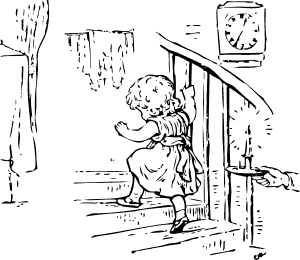
The English language is melting pot of many influences, mainly from the Germanic languages introduced in the 5th-7th centuries AD from the German/Dutch regions. Add in more Scandinavian influences from the Viking settlements in the 7th-9th centuries and language from the Norman conquest in the late 15th Century, together with the many influences from Greek and Latin, and we arrive at the language we all use today. Consequently, the terminology and common phrases around staircases are varied, making their etymology an interesting thing.

Staircases in Culture: Movies & Cinema
This stage of our Staircases in Culture Series celebrates the part staircases have played on the big screen. There have been many examples to choose from. Read all about our favourite staircase movie scenes or watch the video montage to see how many of the classic scenes you recognise:
Staircases in Culture: Art
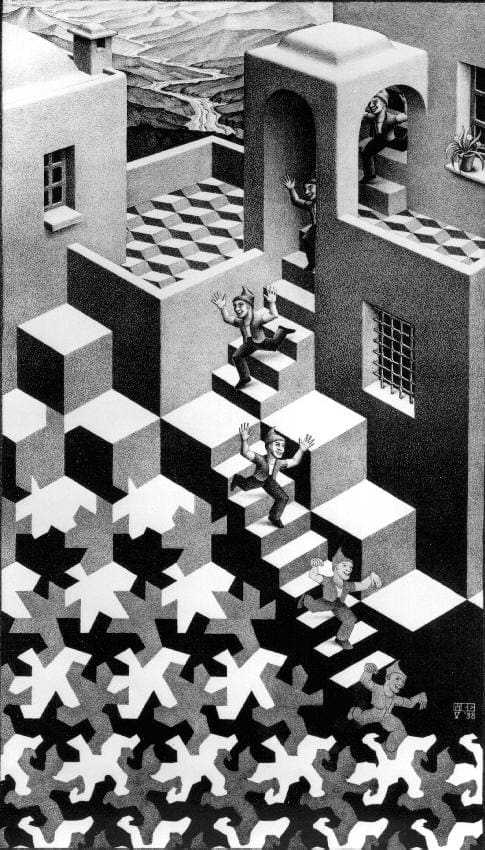
The next stage in our Staircases in Culture series focuses on staircases in art. Artists throughout the ages have had a rich history of including staircases, as you may imagine. This article will focus on some of our favourite pieces, including artworks of cultural significance.
M. C. Escher
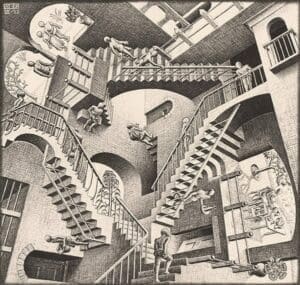
The creations of Maurits Cornelis Escher (17 June 1898 – 27 March 1972) are still widely enjoyed and never fail to fascinate and enthral. Despite having created a great number of lithographs, engravings, drawings and sketches, it is perhaps his experimentations with architecture, perspective and impossible spaces for which many remember him. Learn more here.